INDUSTRIAL TRADE ESTIMATING
Industrial Electrical Estimating Services
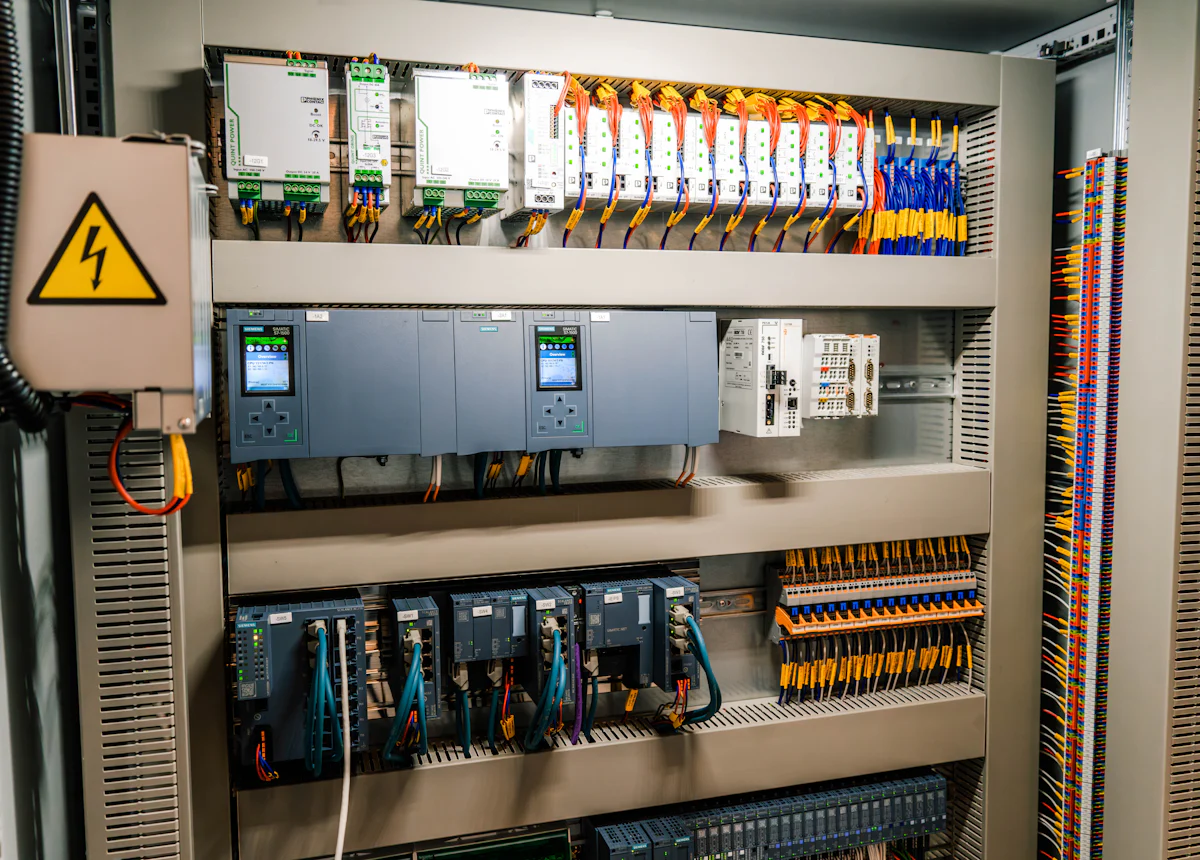
Request a defined electrical takeoff or priced bid package for plant construction, equipment additions or an industrial retrofit. Identify power, controls and instrumentation responsibilities before quantities are combined.
For industrial electrical contractors, EPC bid teams and equipment installation contractors.
YOUR DRAWINGS. A DEFINED PROPOSAL.
Get your electrical & controls quote.
Send your details right here. Share the package you’re bidding and the output you need.
- One trade or a combined industrial package
- Quantities only or a priced cost breakdown
- Scope, fee and delivery agreed before work
DEFINE THE BID PACKAGE
What goes into the electrical & controls estimate?
A single-line diagram describes the distribution arrangement, but it does not provide every installed cable length or routing detail. Cable schedules, layouts, equipment locations and specifications help establish measurable quantities. Controls and vendor-package wiring need a separate scope boundary.
| Scope | Quantity detail | Unit basis | Review point |
|---|---|---|---|
| Distribution | Specified switchgear, transformers, panels and MCC equipment | EA | Distinguish equipment supply from installation-only work. |
| Feeders and branch circuits | Cable and conduit by size, type and route | LF or m | Separate route length from conductor quantity. |
| Cable support | Tray, fittings, supports and grounding components | LF / EA | Count fittings and support scope using available details. |
| Terminations | Connections, glands, lugs and identified interfaces | EA | Reconcile each end with vendor and field responsibilities. |
| Controls and instruments | Specified devices, cables and interface connections | EA / LF | Separate instrument supply, installation and integration. |
REVIEW THE MEASUREMENT BASIS
Worked quantity example: one route, two circuits
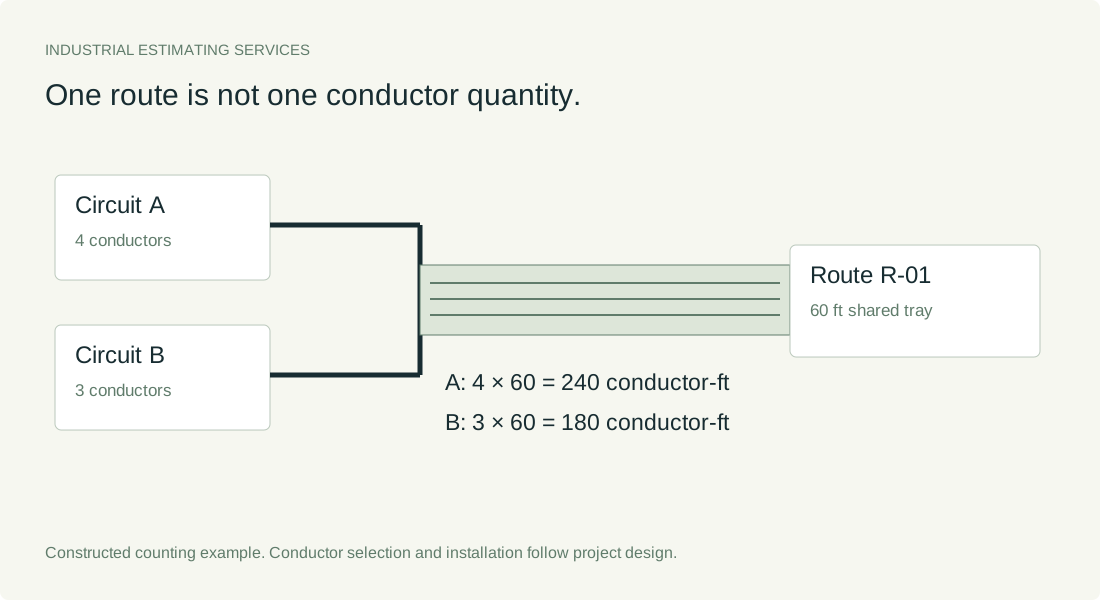
Consider a constructed 60 ft route carrying two circuits of separate individual conductors. Circuit A has four conductors and Circuit B has three. Assume one tray serving the entire route. These inputs explain measurement units; they do not specify a compliant circuit design.
| Measured item | Calculation | Quantity | Boundary |
|---|---|---|---|
| Shared tray route | 1 × 60 ft | 60 LF | Count the tray once, not once per circuit. |
| Circuit A conductors | 4 × 60 ft | 240 conductor-ft | Separate individual conductors in this example. |
| Circuit B conductors | 3 × 60 ft | 180 conductor-ft | Keep the circuit and conductor descriptions distinct. |
| Individual conductor ends | 2 × (4 + 3) | 14 ends | End count alone does not establish lug, gland or testing quantities. |
Constructed measurement dataset, not a client takeoff. Drops, slack, splices, tray fittings, supports and terminal allowances are excluded from these arithmetic rows and require their own drawing/specification basis.
Documents to include with your enquiry
Send the latest available revisions and identify any documents still to follow. The proposal can then distinguish fully defined work from items requiring clarification.
- Current single-line diagrams and equipment schedules
- Power layouts, cable schedules and routing drawings
- Grounding and bonding details
- Instrumentation schedules, loop diagrams and controls scope where applicable
- Equipment vendor requirements, project location and bid deadline
Scope boundaries to resolve before pricing
- Owner-furnished switchgear with contractor unloading and setting
- Tray supports and penetrations outside a cable-only takeoff
- Vendor wiring versus field control wiring
- Temporary power, isolation and outage-related work
- Testing and start-up support excluded from equipment supply
Include the bid instructions and relevant vendor quotations so responsibilities can be reconciled against the drawings. Exclusions should be explicit and consistent across the takeoff, cost sheets and proposal.
Power distribution and equipment interfaces
Tag each major equipment item and identify its supply, setting, connection and testing responsibilities. Equipment quoted by a vendor should be reconciled against the installation estimate so installation labor is not accidentally omitted or equipment supply counted twice.
Measure the right electrical quantity
A feeder route, a cable assembly and individual conductors are different quantities. Show units and measurement rules explicitly. Record vertical drops, termination allowances and routing assumptions so the contractor can review their effect on the bid.
Instrumentation is its own boundary
Confirm whether the package includes field instruments, tubing, junction boxes, instrument cable, controls wiring and integration support. Quantify what the supplied documents define and list incomplete interfaces for clarification. Engineering, programming and commissioning responsibilities must be agreed separately.
Separate route length from installed conductor quantity
A conduit route, a multicore cable and individual conductors are different measured items. Record the circuit or cable identifier, route basis, conductor count, cable type and units. A shared tray route should not be counted once for every cable as if each cable requires a separate tray. Conversely, one tray length does not describe the full cable installation quantity.
Build a termination and interface schedule
Reconcile the equipment schedule, cable list and available termination details. Identify where power ends and controls begin, which party supplies glands or lugs, and whether vendor internals include the wiring shown. Keep instruments, junction boxes, field cable and system integration responsibilities visible rather than treating instrumentation as a single undefined allowance.
Show labor and subcontract boundaries
Distinguish cable pulling, tray installation, termination, testing and specialist attendance according to the agreed package. Access height, congestion, work in an operating facility and permitted work windows may change the execution basis. Record these assumptions and confirm the labor and subcontract requirements before treating a preliminary cost as a tender commitment.
Compare vendor quotations consistently
Check ratings, quantities, delivery, freight, accessories and installation exclusions when incorporating switchgear, transformers or MCC quotations. Record quote dates and validity. If a quoted item is owner-furnished, keep the contractor setting and connection work while excluding only the supply cost that is genuinely outside the bid.
Cost and effort drivers to define
- Circuit and cable variety
- Completeness of routing and schedules
- Owner- and vendor-furnished equipment
- Specialist testing and controls interfaces
Specify your output package
- Equipment and circuit schedules linked to drawings
- Cable/conduit quantities with explicit units
- Supply versus installation reconciliation
- Defined testing and instrument-interface scope
Agree the deliverables before work starts
Specify a quantity-only takeoff or a priced estimate, the required grouping and file format, and whether a drawing register, marked plans and a written basis of estimate are included. Revisions and additions should have a defined scope so both teams understand what changes are covered.
Questions about electrical & controls estimating
Is instrumentation included automatically?
No. The quotation should list which instrumentation and controls items are included. Device supply, field installation, wiring and integration can belong to different packages.
Can owner-supplied equipment be excluded from material cost?
Yes. Identify it in the equipment responsibility schedule and retain any contractor unloading, installation, connection or testing scope that remains applicable.
How are cable lengths established?
Use the agreed routing drawings and measurement method. Where routing is incomplete, document the basis and allowances instead of presenting the result as a fully measured route.
Related industrial estimating packages
YOUR NEXT BID
Define your electrical & controls bid package.
Share your drawings, project location, required trades and deadline. Agree the scope, fee and delivery date before estimating begins.